
“Methodologically, I always started with the families”
Dr. Gabrielle Oliveira shares insights from her book, Now We Are Here: Family Migration, Children’s Education, and Dreams for a Better Life.

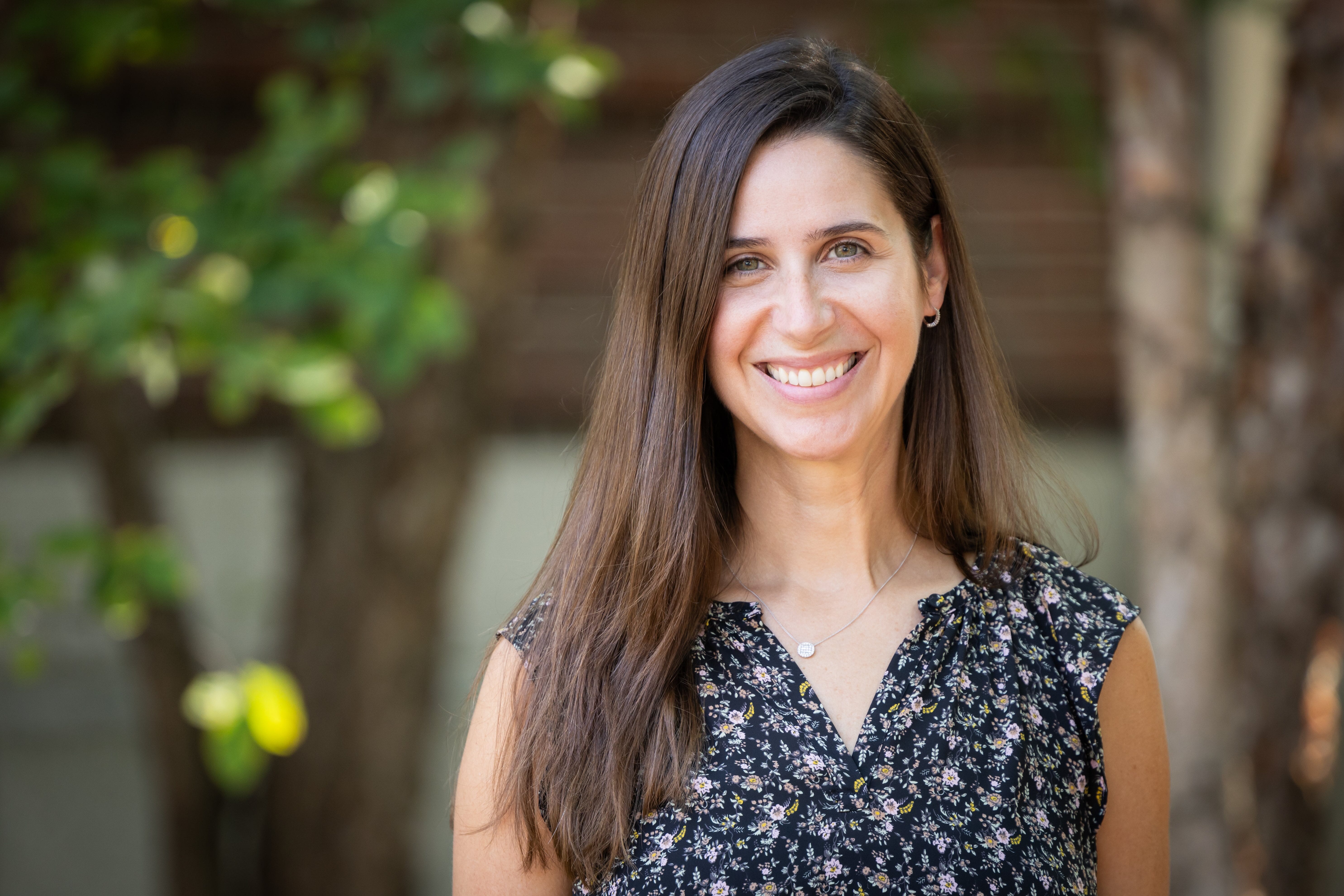
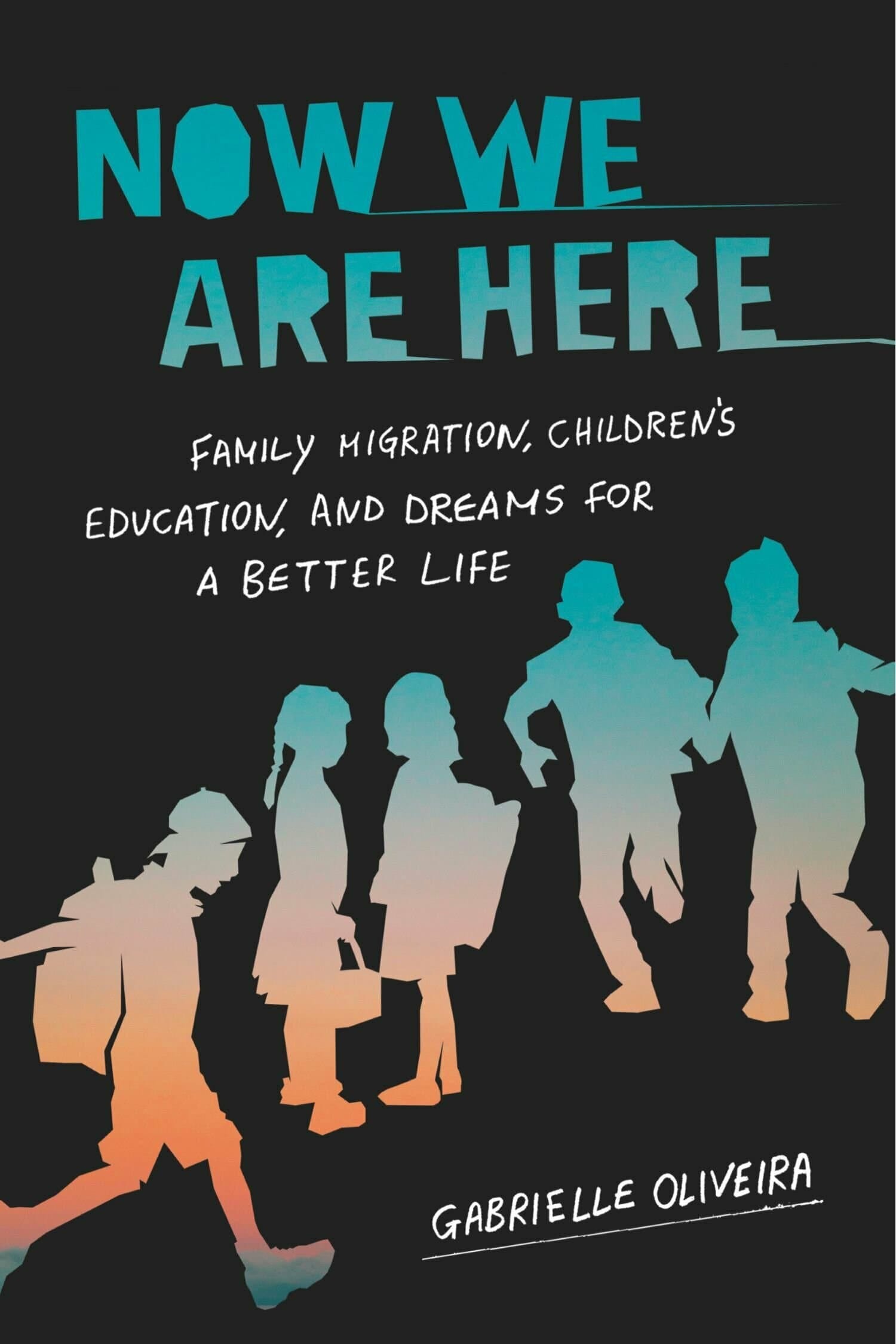
Part way through reading the recently published book, Now We Are Here: Family Migration, Children’s Education, and Dreams for a Better Life, by Dr. Gabrielle Oliveira, I was stuck by the sheer power of care in the context of family immigration. How families weather the storms of harmful U.S. policies and schooling experiences alike, Dr. Oliveira’s book is a warm look at the strength of kids and their parents.
Dr. Oliveira is the Jorge Paulo Lemann Associate Professor of Education and of Brazil Studies in the Harvard Graduate School of Education. In this first part of our conversation, Dr. Oliveira reflects on the process of falling into the research that became Now We Are Here and describes the unique contexts of parenting through and after family detention and separation during the first Trump administration.
ANTERO GARCIA: I want to start with the obvious question: What was the impetus for this line of research and this book?
GABRIELLE OLIVEIRA: I was doing work in a couple schools documenting the new bilingual education program that they were starting here in Massachusetts after a 17-year-old statewide ban. My research for that project explored if this bilingual program could help support parents to come closer to the school? Can they be more part of the kids’ lives? Can the kids be their full selves and talk about the things that matter for them?
I had all these questions and documented that for a few years. I was in the middle of that when the zero-tolerance policy happened, and I started meeting families who had been through that. In our line of work it is hard to be as responsive to a topic so fast in that way.
AG: This is Trump 1.0, when family separation was happening?
GO: Exactly. So I was doing my work in this district in the fall of 2018. I’m just getting these families talking about what had just happened to them and they’re going to these schools. And that became so much more important than all my other questions that I had about the bilingual program and the logistics. I was like, “How do I honor this? How do I make space for this research? And maybe it’s just a few families and maybe I write an article on this. Maybe it’s not as big as I’m thinking.”
AG: You didn’t think you were going to spend more than half a decade on this as the project.
GO: I didn’t because I was thinking, is it okay for us to respond so quickly to something as scholars or do we have to see it roll out for a little longer, see the phenomena that we’re dealing with? Maybe I could do interviews in retrospect, but then I thought, “I’m here and they’re giving me this information and are there more families?” And then it started expanding.
AG: Care is a central component of what your book is about. Your work frames the acts of immigrating to this country and undergoing the atrocities you described as profound acts of familial care. I’m curious, how your understanding of care has changed through this work.

GO: When I wrote my first book, Motherhood Across Borders, I also thought about care from the point of view of the women and this idea of reconceptualizing motherhood from the point of view of what does it look like to be far away but still build practices of care. I kept thinking about that concept from that book and thinking about some of the things that people would actually judge as anti-care, like when people say, “Wow, I can’t believe these families would put children in this position.” That’s a lot of how the media is covering this issue. For me, if I am to define care from the point of view of these parents, then to migrate is exactly to free their families from a future of no future. To go through all of that is actually actualizing care.
Looking at these parents, I think that the risk-taking, the sacrifice, the quick decision-making, the financial investment, the trust that you’re going to make it work, the resilience, the resistance: all of that together is care. And I wish that more educators would see these these families as incredibly powerful. They did everything they could to stay together.
“Looking at these parents, I think that the risk-taking, the sacrifice, the quick decision-making, the financial investment, the trust that you’re going to make it work, the resilience, the resistance: all of that together is care.”
AG: I’m thinking about a tension expressed between two parents about their differing reflections while traveling to the United States. Building on your work around motherhood, what were some of the gender differences you saw around care or around the experiences of coming to the United States?
GO: I love that you picked up on that. I think that there’s a really interesting piece here … there’s another exchange where a parent is talking about how he got over the wall and he was holding his son and his son slipped fell on the ground and the mother is right next to them. The mom is sobbing and she’s upset and she feels guilty.
AG: To me, I read this feeling like the mothers in this study carried more guilt around their experiences.
GO: Exactly. I definitely think they carry more shame and guilt because of all the constructions around motherhood and what it means to be a woman sacrificing and how much of your womanhood is defined by the quality of your motherhood. I think that’s a huge piece. I also think for the fathers, there’s also this stoic idea of I’m going to get you through. And that’s also to counter pain, to kind of, let’s not dwell on the tears and on the trauma we made it through, we’re going to be okay.
I also think about the gender dynamic between participant and researcher where they’re also telling me, a woman, that they got it done. The fathers voiced it in the way of questioning, was it worth it. Whereas the mothers were very concerned about if the child was okay, if they were healthy, if they were traumatized for the rest of their lives, if they had nightmares. So I think there are many instances of this gender dynamic that you point out.
AG: Your book details truly horrific personal experiences of detention and family separation. A chart in the book’s opening documents the number of days some families were separated from one another while in detention centers. How did you, as the researcher fathom writing these experiences down? How did you deal with the secondhand trauma of writing alongside your participants and sharing these narratives?
GO: Yeah, I usually say that between my first project and this project I needed a recovery time. One of the things that I learned between my first book and this book was to build in a lot of space for things that were not about the absolute tragedy of what families went through. And I think that an advantage of ethnography is that I was also there for a lot of meals and nail painting and cooking and doing other things that balance out being together. I wasn’t there to pick on anybody’s scabs. And I think the ways in which they were talking about it felt very much part of the moment. So I think for me, I had a lot of guilt because I came home to my own kids as well. In my first project, like you, I wasn’t a parent in the beginning and then being a parent carried a ton of guilt.
“I think that an advantage of ethnography is that I was also there for a lot of meals and nail painting and cooking and doing other things that balance out being together. I wasn’t there to pick on anybody’s scabs.”
AG: It was so much easier before I had kids!
GO: Totally. I felt like I was a true learner with them. And I’m still a learner with this one, but in this case, I just kept thinking about what you said. I was like, “Oh my gosh, if I couldn’t see my kids.” And that chart that you mentioned, the tricky part of that is that the longest was [a father and daughter separated for] 72 days, but for the families who were even separated for 5, 6, 7 days, that was a period where they just didn’t know how long it was going to go.
AG: I can’t imagine being separated for even a day. The not knowing where your parent is feels irreparable.
GO: Right. So if you’re in a store and you can’t find your kid for 30 to 45 seconds and that damage that does your body and your brain in terms of that stress... So imagine being in that loop in a completely vulnerable state: their documents were taken, you don’t have your passport, you can’t call anybody, you don’t have a lawyer. I had the advantage of seeing them reunified. I think that was really helpful to document those stories. I think it would’ve been different if I was interviewing people who were actively still separated. I don’t know how I would’ve dealt with that.
AG: Shifting to the experiences of the kids in their U.S. schools, you describe how teachers would basically shut down the kids talking about their experiences immigrating to the U.S. or in detention centers. The teachers, when asked, would say they shut down these reflections because other kids aren’t developmentally prepared for those conversations.
GO: Right. And the other part is that these teachers also rationalized this by saying, “I want to protect these immigrant children from continuing to be traumatized.” So the rationale is if I open this up and they talk about it, they’re only going to think about that more and they’re going to be even more upset. So if I put a lid on it, they can move on and think about how bright their future is going to be because now they’re here and they’re going to be great. At the same time, I was really concerned about also being able to describe the teachers as the incredible humans that they are.
AG: Yes, you offer a full picture of these teachers, but these moments read to me as missed opportunities for learning in schools.
GO: Missed opportunities. Methodologically, I always started with the families and then I went to school. My point of view was very much focused on how the children and families talk about school.
Interestingly, most of these teachers, are immigrant themselves, which you would assume that they would be even more connected with what was being shared. But they had this fear of opening up Pandora’s box by talking about something that is taboo. I always get this question, “Well, isn’t that the same as when kids bring up divorce ... “ If you’ve been in a kindergarten classroom, kids say all kinds of stuff. I understand the teacher’s response to say, “Thank you for sharing. This is not the time. Keep that in your thought bubble.” You know what I mean? That’s all fair for the teachers to be able to get through content. In this case, it just felt that the teachers are talking about how they’ve been trained to talk about anti-racist pedagogies. They’ve been trained to talk about trauma or gender …
AG: But not immigration.
GO: But not immigration. They were very nervous about the type of visibility that it would bring a child in the school that could potentially put them in a vulnerable place.
Propina
We’ll continue our conversation with Dr. Oliveira next week. In the meantime, please check out her recently published book, Now We Are Here: Family Migration, Children’s Education, and Dreams for a Better Life.
We’ll see you next week.
I loved Motherhood Across Borders and am so looking forward to this new book! I really appreciated the conversation here about how the research acts on the researcher and researcher as parent.